An All-in-One Guide to Building a Travel App Like Klook UK
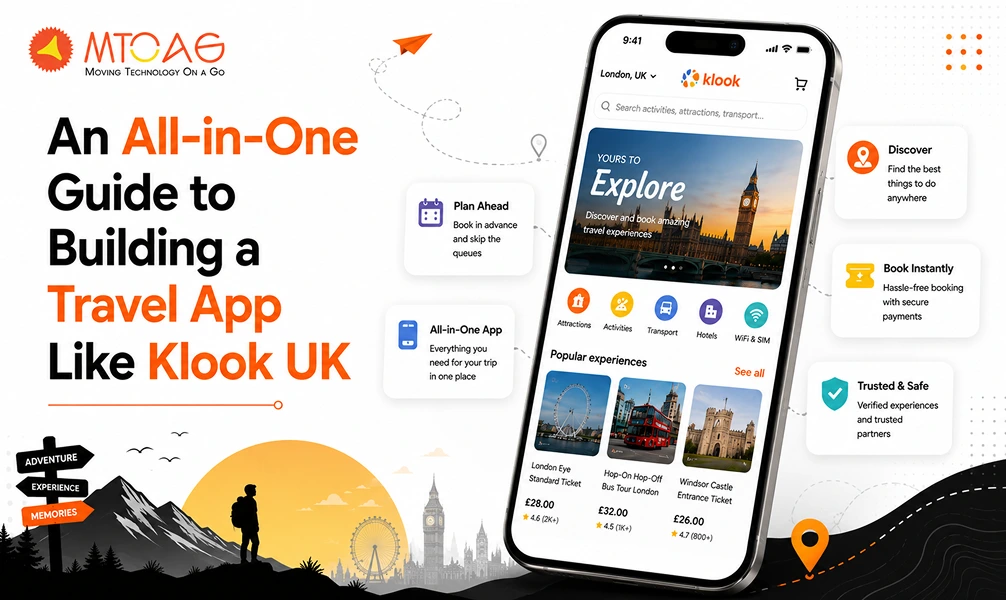
Gone are the days when travelling was all about long hours of journey, relentless time on finding the best accommodation and barely any time left to explore the place that you have been planning to visit for a long time. But with advances in technology, travel booking apps like Klook UK have capitalized on these opportunities to deliver the best experience for travellers without hassle.
These travel apps do everything literally, from transportation and hotel booking to local travel itineraries and food. And modern travellers nowadays pay for the experience, which makes a travel app development like Klook UK one of the best investments for UK tour and travel businesses.
However, the development of such apps requires a significant investment, advanced tech stack, integrations, payment systems and personal recommendations. But if there is a skilled travel booking app development company by your Side, you only have to focus on your business growth, as they are experts in managing the rest.
But before you start right away, it would be great if you have a basic knowledge of where to start and what to expect. Through this guide, we will explain the entire process of developing an app like Klook, while covering the key aspects, including Klook’s business model, the UK’s travel industry, the steps and the cost to develop travel apps in the UK.
Understanding the UK’s Travel Industry
The travel industry in the UK is one of the strongest contributors to the country’s economy, representing nearly 10% of the total GDP. According to the data from CommonsLibrary, overseas visitors spent over £32.5 billion in Britain in 2024.
As per the analysis by Market Research Future, the UK’s travel and tourism market was valued at £27.26 billion in 2025. The market size is forecasted to hit £45.24 billion by 2035, growing at a CAGR of 5.26%.
Meanwhile, the specialized and niche travel sectors are consistently growing, with the UK being the largest adventure tourism market in the entire Europe. It accounts for 19% of global adventure travel.
Digitalization remains the strongest point for increased travel to the country, with mobile bookings now accounting for 46% of all the online gross bookings as travellers are shifting towards mobile-native booking apps and websites.
Understanding Klook UK’s Business & Revenue Models
The best of what users have reported about Klook UK is that it offers an extremely affordable travel experience. The website has surged to a $3.5B+ gross booking value, which includes local transportation, niche cultural experiences and high-demand attractions.
Its mobile-first platform has over 60M monthly users with 75% mobile booking rate. With AI-driven personalization and other core features, the platform offers travel services to 2700+ destinations.
Klook's revenue model is based on a commission structure, which earns it approx 15-25% on every booking across experiences and activities. Its products, such as Klook Pass and Klook Stay+ bundles attractions and hotel bookings to drive cross-sell adoption.
Meanwhile, Klook UK also generates revenue through monetization models that improve its profitability while delivering what it is popular for.
Sponsored Promotions
The listed hotels, restaurants and activity providers pay commission to Klook to promote their service at the top of the search results or recommendations section within the platform.
Commission-Based Model
As said earlier, travel booking apps like Klook earn a significant portion of their revenue through commissions. This is even one of the most common travel app monetization models. The platform earns 15-20% commission on each booking.
Dynamic Pricing and Service Fees
The platform applies a convenience fee or even charges additional fees during peak booking periods and high-demand travel seasons. It can be transaction service fees, priority booking, cancellation fees or travel support service.
Bundled Travel Packages & Deals
Klook UK lists multiple travel services in combined discounted packages, which not only increases user convenience but also the entire booking value. Travellers can bundle the deals that include hotel bookings, sightseeing and activities in a single booking, which generates package commission and higher bookings margins to the platform.
Loyalty Programs
The platform collaborates with businesses and brands to offer users reward-based royalty programs to boost repeat business. Users can collect these reward points and redeem them through cashback, discounts or any partner offer. The revenue usually comes from sponsored rewards, brand partnerships ad increased customer retention.
Key Features to Include in Your Klook-Like App
The features of a travel booking platform work like its soul. To build a successful travel website like Klook UK, you first need to decide on the features that increase user convenience, travel management and user engagement. The right choice of features decides whether it will be adopted or abandoned.
Here’s a list of the features that every travel booking app should have:
User Registration & Profile
This is the first and foremost feature to be integrated into the platform, as it allows the onboarding of users to the platform. Allow users to create an account, or log in through social accounts, manage information, access booking history and even save preferences.
Sign Up/Login
Social Login
Profile Management
Search & Discovery
This feature helps users quickly search for packages, hotels, tours, local transportation services, restaurants, and activities based on ratings, location, budget and interest.
Smart Search
Filters
Category Browsing
Travel Booking System
This integration of this feature helps users book travel services with immediate booking confirmation and real-time availability.
Ticket Reservation
Instant Booking
Scheduling
Personalized Recommendations
The personal recommendation features use AI-based suggestions for travel activities and destinations nearby according to the user’s interests and previous bookings.
AI-Based Suggestions
Recently Viewed
Wishlist
Payment Gateway Integration
If any user is buying the travel package, they would definitely prefer to pay for it within the platform. Integrate secure payment options, such as cards, wallets and even EMI options.
Secure Checkout
Multiple Payment Methods
Digital Wallets
Reviews & Ratings
The reviews and ratings feature builds trust for the platform, as it allows users to share their honest experiences and rate services. This helps new users to understand and trust the platform for their bookings.
Star Ratings
User Feedback
Travel Reviews
Push Notifications
The push notification feature is one of the most important ones of all. It allows the platform to send real-time updates on cancellations, discounts, booking status and travel schedules.
Booking Alerts
Offers
Travel Reminders
In-App Chat & Customer Support
The customer support feature is a must-have for travel booking platforms. Many travellers need assistance while booking or after booking, or even have issues with the experience. To address them efficiently, an in-app chat option should be available to resolve the issues immediately.
Help Center
Live Chat
AI Travel Agent
Loyalty & Rewards Program
The loyalty and reward programs on the platform earn users points and cashbacks that they can use on their next booking, which directly encourages repeat business.
Reward Points
Coupons
Membership Benefits
Detailed Steps of Travel App Development Like Klook UK
Step 1: Decide What Your App Will Actually Do
Before you spend a single pound, get clear on one thing: what problem does your app solve? Klook solves the "where do I book activities" problem. Your app needs its own lane.
Will it focus on UK day trips?
Group travel bookings?
Budget backpackers?
Pick one audience and build for them first. Trying to serve everyone at launch is the fastest way to run out of money. So don’t do that.
Step 2: Map the User Journey on Paper
Sit down with a notebook and write out exactly what a user does from the moment they open your app to the moment they confirm a booking. Every screen, every tap, every decision.
This is called a user flow, and doing it on paper before hiring anyone saves you weeks of expensive back-and-forth with developers later. You will spot problems at this stage that would have cost thousands to fix in code.
Step 3: Find a Development Partner
This is where most investors go wrong. They hire the cheapest team they find on freelance platforms and end up with an app that crashes on Android. Look for a travel portal development company or team that has already built a marketplace or booking app before.
Ask to see a live app they built, not just screenshots. A team that has solved booking flow, payment errors, and cancellation logic before will save you from solving those problems yourself.
Step 4: Build a Minimum Viable Version First
Do not build every feature at launch. Build the core booking flow: search, select, pay, confirm. That is it. Klook did not launch with 20 countries and 10,000 activities.
They started small and added features based on what users actually used. A working simple app beats a broken complex one every time.
Step 5: Plug In the Right Third-Party Services
You do not need to build a payment system from scratch, as there are Stripe and PayPal. You do not build your own map tool, as there is Google Maps. You do not write your own email system, as there is SendGrid. These are called APIs, and using them cuts your development time in half. Your team will handle the connections; you just need to know which services to approve.
Step 6: Test It With Real People Before You Launch
Give your app to 20 people who fit your target audience and watch them use it without helping them. Do not explain anything. Just watch. You will see exactly where they get confused, where they drop off, and what they expected to find but could not. Fix those things before you go public.
Step 7: Launch Small, Then Grow
Pick one city or one category. Launch there. Collect bookings, collect reviews, and collect feedback. Once that works, expand. This is how Klook scaled without falling apart. Slow and steady growth gives your tech team time to fix issues before they affect thousands of users.
How Much Does It Cost to Develop A Travel App in the UK?
There is no fixed cost associated with travel app development, as it fluctuates between your requirements, features and most importantly, the complexity. The calculation is simple; the more features you need, the higher the cost will be.
With the integration of an advanced tech stack and AI features, the cost increases significantly. Although the cost is not fixed, if we look into the industry averages, the estimated travel booking app development costs range between £30,000 and £250,000.
To make you understand more precisely, let’s break down the cost based on different complexities:
Basic MVP (Minimum Viable Product): The MVP costs around £25,000 – £40,000 and includes only the basic features, such as search and filters, user profiles, in-app payment, and an admin dashboard.
Mid-Range App: The mid-range apps with features like itinerary generation, real-time push notifications, integrations with hotel or flight APIs, and multi-currency support cost around £60,000 – £120,000.
Full-Scale OTA (Online Travel Agency): The most advanced, full-scale travel booking app with features like AI-driven recommendations, dynamic GDS integrations, loyalty program and mapping costs between £150,000 – £250,000.
Is It Profitable to Develop a Travel App in the UK?
If you have skipped reading the UK’s travel industry statistics above, let us remind you how lucrative this business model can be. The tourism industry is booming and continues to see a significant rise post-Covid periods.
Although Klook UK’s financial details aren’t available publicly, its global revenue of $417.1 million is clear evidence of its profitability. Despite the presence of giants like Booking.com, Expedia, and Airbnb, Klook has managed to create a place for itself in the UK.
The travel and tourism numbers in the country continue to grow, providing lucrative opportunities to businesses to capitalize on.
Conclusion
The UK travel and tourism industry is massive, and the opportunities that lie there for businesses are even bigger than you think. As the demand for online booking shows no signs of stopping, it is the best time to invest in travel booking app development like Klook UK.
If you have a travel app idea, let’s together make it profitable and successful. And who knows, your app would be the next big thing in the UK.
With over 17+ years of engineering experience and IT domain expertise, Mtoag Technologies counts among the best travel app development companies in the UK. We have so far delivered 2500+ successful projects that speak a lot about our expertise.
FAQs
What AI Features Should be Integrated in Travel Apps?
The most useful ones are: smart itinerary builder (suggests day-by-day plans based on your budget and interests), real-time price alerts, and a chat assistant that resolves real issues.
What is Klook Used for?
Klook is a booking platform for experiences to buy theme park tickets, city tours, airport transfers, and cooking classes. Instead of hunting across 10 websites, you book everything activity-related for your trip in one place, often at a discounted rate.
Is Klook Legit?
Yes. It's a real company, founded in 2014, backed by major Investors and used by millions Globally. The tickets are genuine, but like any platform, read cancellation policies before booking, as some are non-refundable, especially theme park passes.
What Technology Stack is Used in Travel App Development?
Most travel apps use React Native or Flutter for mobile (so one codebase runs on Android and iOS), Node.js or Python on the backend for APIs, PostgreSQL or MongoDB for data, and AWS or Google Cloud for hosting and third-party APIs for flights, hotels, and maps.