Building AI Systems That Survive Real Usage
AI development isn’t about working on a model and hoping it works. Our developers design systems knowing they will face live traffic, unpredictable inputs, and evolving datasets. We architect pipelines, integrate models, and align backend systems so that every component can handle real-world conditions.
Even after launching the AI systems, we regularly monitor outputs, catch edge-case failures, retrain models when drift appears, and fine-tune inference pipelines without downtime. Tools like LLM frameworks and experiment tracking are applied with precision to improve both speed and accuracy in production.

Our Simplified Hiring Process
 Describe Your Needs
 We begin by reviewing your project specifics, AI use cases, and technical requirements. This includes understanding which models, datasets, and backend systems are involved. We focus on real operational expectations rather than generic capabilities. The goal is a clear blueprint for the skills and experience needed in the developers you hire.
 Make a Shortlist of the Best Talent
We evaluate candidates based on actual project experience, code samples, AI deployment history, and problem-solving under live conditions. Our shortlist prioritizes engineers who have maintained models post-launch, handled data pipelines, and integrated AI into existing applications in UK business environments.
 Conduct a Talent Interview
Interviews focus on hands-on skills. Candidates explain previous deployments, illustrate handling of production failures, discuss monitoring, optimisation, and maintenance strategies. We test understanding of system-level coordination, model drift handling, and backend dependencies. This ensures your team can rely on developers in real-world conditions.
 Acknowledge and Start the Project
Once the candidate is chosen, onboarding is practical and immediate. Responsibilities, workflows, and system ownership are altogether defined. We integrate them with your existing engineering teams, establish communication channels, and set up operational access. The project begins with clear accountability.
Leverage Our Dedicated Hiring Models
AI Model Integration
We embed models into live applications while accounting for latency, concurrency, and error handling. Developers ensure inference pipelines connect reliably with backend services and frontend interfaces. Model outputs are validated against business logic, and automated tests monitor integration.
API Development for AI Services
We create APIs that serve AI predictions, handle versioning, and maintain backward compatibility. Developers monitor request throughput, error rates, and response quality. Security, rate limiting, and logging are implemented operationally. When models are updated, APIs adapt without breaking client applications.
Backend Coordination
Our team aligns data stores, batch processes, and compute infrastructure with AI workloads. Developers plan for failure modes, logging, and alerts. System dependencies are documented and maintained. Every change in the AI layer considers downstream effects to avoid silent failures in production.
Data Handling and Database Design
We implement pipelines for structured and unstructured data, ensuring consistency, quality, and performance. Developers manage ETL processes, validation, and schema evolution while considering privacy and compliance. Data flows are monitored, and anomalies trigger alerts.
Performance and Reliability Handling
Our team tracks inference latency, memory consumption, and throughput under live traffic. Alerts are in place for performance degradation. Developers tune models, balance workloads, and adjust infrastructure to prevent downtime. Every metric is actionable, and fixes are applied before small issues affect business operations.
Ongoing AI System Maintenance
After launch, we do not step away. Hire AI developers to monitor model drift, retrain models, patch APIs, and update pipelines as datasets evolve. Every maintenance task is logged, tested, and deployed with system awareness. Our focus is continuity: keeping AI systems accurate, responsive, and fully aligned with operational demands.
Engagement Models That Fit Your Workflow

Full-Time Monthly Hire
Your developers work exclusively on your projects, integrated with internal teams. They maintain AI systems daily, implement new models, and respond to live issues. UK-based clients rely on this model for accountability, operational familiarity, and consistent ownership over pipelines, APIs, and backend coordination.
- 9 hrs/day
- 180 Hours
- Direct Communication
Part-Time Monthly Hire
Part-time hires are allocated for specific models, pipelines, or tasks. They engage on a predictable schedule, addressing system needs without overstaffing. This approach suits ongoing maintenance, model updates, and API adjustments, giving teams targeted expertise while keeping costs and operational complexity manageable.
- 4 hrs/day
- 80 Hours
- Daily Reporting
Hourly Hire
Hourly hires are used for short-term interventions like fixing production issues, retraining models, or performing optimisations. Developers join operationally, access the system responsibly, and leave with all work documented. Businesses value this for immediate support, emergency fixes, and targeted AI project tasks without long-term commitments.
- 50/100 Hours
- SCRUM
- Version Control
Work That Makes Us a Leading Web & Mobile App Development Company
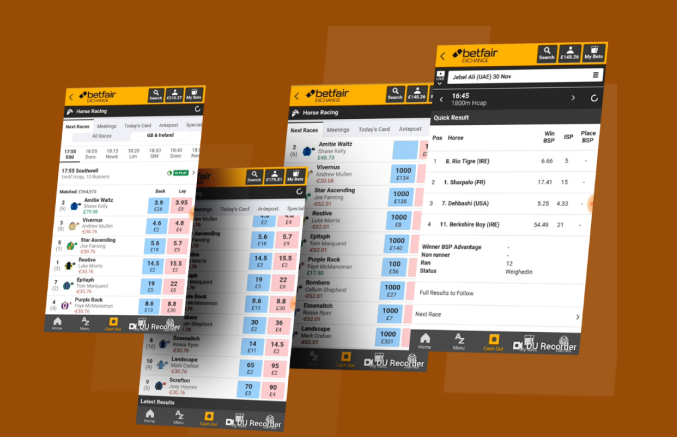
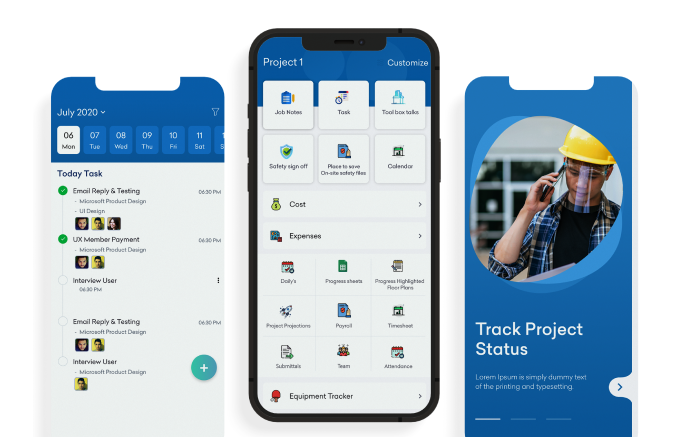
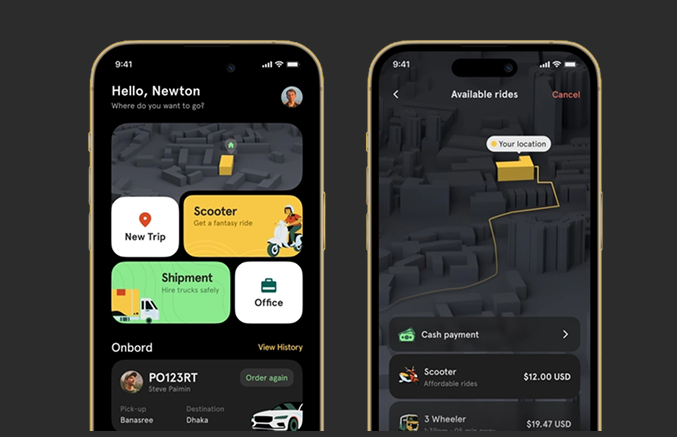
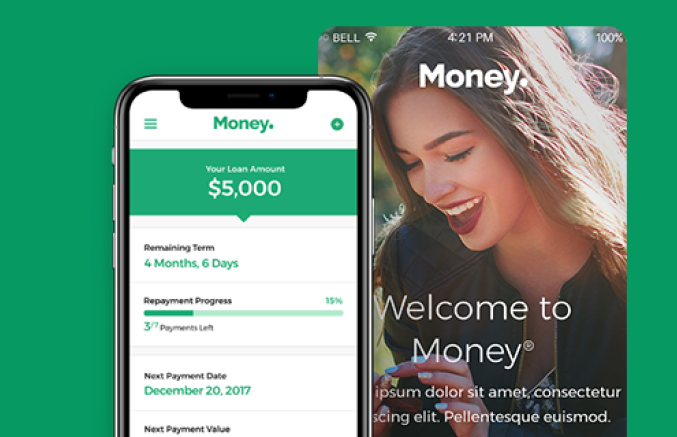
These case studies reflect our expertise, from architecture to live deployment. Each example highlights real decisions, technical execution, and outcomes observed in production environments.
Why Hire AI Developers from Mtoag Technologies?
Engineering Experience Beyond AI Trends
Our developers have hands-on engineering experience across backend, data pipelines, and system deployment. They bring practical knowledge of live applications, understand dependencies, and anticipate operational issues. This experience ensures that AI code is delivered with attention to real-world reliability.
System-Level Ownership Mindset
Each developer is responsible for the AI system from training to deployment. They coordinate with backend engineers, monitor pipelines, and implement fixes. Ownership includes anticipating failures, verifying changes, and tracking metrics, ensuring that models work as intended in production environments.
Real-World AI Issue Handling
We handle production failures, latency spikes, and unexpected data inputs. Developers debug, patch, and optimise without interrupting users. Experience with real incidents informs future delivery, enabling proactive identification and resolution of potential operational problems.
Continuous Tuning and Maintenance Responsibility
AI models require constant monitoring. Developers retrain, adjust thresholds, and fine-tune pipelines as data shifts. Maintenance is embedded in workflow, not an afterthought. Every change is tested and deployed with operational context, reducing risks associated with drift and system updates.
UK Client Collaboration
Our teams operate within UK time zones, integrating seamlessly with engineering and product teams. Communication is structured around operational needs. Developers attend planning sessions, daily stand-ups, and deployment reviews, ensuring that AI delivery matches the rhythm and expectations of UK businesses.
Transparency and Accountability
We log every change, decision, and deployment. Alerts, dashboards, and reporting are operational tools, not presentation aids. Teams can track what has been done, why, and how it affects live systems. Our developers’ responsibilities are clear, traceable, and aligned with long-term system health.






FAQs
How Do You Evaluate AI Developers Before Hiring?
+We assess past project experience, production deployments, data pipeline management, model monitoring, and troubleshooting ability. Candidates are evaluated through hands-on scenarios, code reviews, and discussions about real operational issues.
Can Your Developers Handle Model Drift After Deployment?
+Yes, developers monitor outputs, retrain models when necessary, adjust pipelines, and ensure that predictions remain accurate. Post-launch adjustments are part of the engagement.
How Are AI Developers Integrated Into Existing Teams?
+Developers join your workflows, communicate directly with backend and product teams, and use existing tools. Responsibilities and access are assigned to ensure immediate contribution without disrupting current operations.
What Types of AI Systems Can Your Team Support?
+Our team supports ML models, generative AI systems, LLM integration, APIs, data pipelines, and full-stack AI applications. Support extends from deployment to ongoing optimisation and maintenance.
How Do You Ensure Reliability in AI Applications?
+Through system-level monitoring, logging, automated tests, performance checks, and timely fixes. Developers take accountability for every pipeline, model, and API involved, reducing downtime and operational risks.
UK Development Services
Hire AI Developers in the UK for Practical Product Integration
UK businesses are moving from AI experiments to production features — recommendation engines, document automation, chat assistants, and forecasting modules embedded inside existing apps. Mtoag AI developers focus on integration quality: model latency, data privacy, monitoring, and fallbacks when predictions fail in real usage.
This cluster connects AI hiring with mobile and web services because most UK AI projects ship inside customer-facing products, not isolated notebooks. Internal links to React Native, full stack, and web application pages show how AI capability supports the broader Mtoag UK delivery map.
If you are evaluating AI partners in London or need remote UK-timezone engineers, review the related services below and our blog guides on UK AI adoption trends.
Practical AI for UK Products
Hire AI Developers UK embeds recommendations, classification, assistants, and automation with GDPR-aware data handling.
We focus on production paths — not demo-only prototypes disconnected from compliance.
From POC to Production
Experiments validate accuracy, latency, and inference cost before rollout.
Production uses API proxies, feature flags, and human-in-the-loop review for high-risk domains.
Engineering Behind AI Features
Developers combine Python or Node, vector stores, and observability without leaking API keys to clients.
Rate limiting protects budgets during usage spikes.
UK Regulatory Considerations
We document model limitations for compliance teams and implement opt-out flows where required.
Sector rules in finance and health inform whether automation needs human approval.
Accountable AI Hiring
Hire AI Developers UK staffs engineers who monitor drift and integration health beyond the first demo.
Measuring AI ROI for UK Buyers
Successful AI features tie to measurable outcomes: support deflection, conversion lift, or operational hours saved. We define baselines before rollout.
Hire AI Developers UK helps UK product teams avoid vanity demos by connecting models to existing auth, analytics, and approval workflows from day one.
Related UK services
Related insights
- UK AI Statistics & Trends— Market context for UK buyers
- Top AI Development Companies UK— Vendor landscape overview
- AI Agents for Businesses— Use cases and architecture
What Our Clients Say About Us

Company is known for its good reputation in the market today. It has catered good ...
Surajpal Raibari
Client Review
I worked with the mtoag technologies for a Software Development project. My initial decision to ...
Archana Sharma
Client Review
We had approached them for developing an application for our high end customers at Gurgaon. ...
Shailendra Yadav
Client Review